AI TOOL / #04221
Moodle GPT Quiz Solver
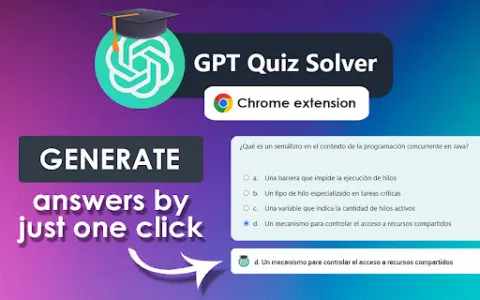
A tool that utilizes the OpenAI API and uploaded files to generate answers for Moodle quizzes.
Introduction
A tool to generate Moodle quiz solutions using OpenAI API and uploaded files.
What is the Moodle GPT Quiz Solver AI Chrome extension/plug-in?
The Moodle GPT Quiz Answer Generator is a tool that enables you to quickly and easily generate answers for Moodle quizzes using the OpenAI API. It utilizes OpenAI’s cutting-edge language models to create these answers. Additionally, it makes use of the new OpenAI Assistant API to handle files – you can upload and delete these files through an extended interface, and the system will generate answers based on the information contained within them.
How to use the Moodle GPT Quiz Solver AI Chrome extension/plug-in?
To use the Moodle GPT Quiz Answerer, you need to upload relevant files through the extended interface. This tool will then utilize the OpenAI API to generate answers based on the uploaded files and the quiz questions.
The core functions of the Moodle GPT Quiz Solver AI Chrome extension/plug-in
Using the OpenAI API to generate answers for Moodle quizzes
Supports file uploading to generate context-relevant answers.
Use the OpenAI Assistant API to process files.
It is allowed to delete files through the extended interface.
Related
Seeing Dogs
An AI-powered app for people with visual impairments to explore the world.
Itsimple AI
An AI-powered bookmark manager, note-taking app, and personal profile link tool.
Riku.ai
A code-free AI platform that enables users to easily build, test, and deploy AI applications.
Flim
An engine that provides creative professionals with the ability to search for images and video screenshots.
Skin Cancer Image Search
A Chrome extension that compares images of moles with a database of skin cancer cases.
EyeGestures
Open-source webcam-based gaze tracking for accessible interfaces and eye-tracking research.